Why Data Centres Need Bespoke Goods Lifts
Data centres are designed around reliability, uptime, security and efficiency. One area that can often be overlooked during planning is how heavy equipment and materials will be moved between levels.
The rapid growth of data centres is creating new challenges for the construction, operation and maintenance of these highly specialised facilities. From server cabinets and electrical equipment to batteries, cooling systems and replacement components, data centres regularly need to move heavy and valuable equipment safely between different levels.
As facilities become larger and more complex, having an effective material handling strategy is becoming increasingly important.
-
What lifting challenges do data centres face?
Data centres contain highly specialised infrastructure, require strict environmental controls and are designed around reliability and uptime. The equipment used within data centres can also be large, heavy and difficult to manoeuvre.
Depending on the facility, items that may need to be transported include server racks, cabinets, UPS systems, electrical components, replacement parts, fit-out materials and more.
Moving this equipment between levels can present significant challenges, particularly where staircases or other access routes are unsuitable.
-
Why lifting equipment should be considered early in the design process
For new data centre projects, lifting requirements should be considered during the early stages of design. The available space, floor-to-floor heights, access routes, platform dimensions and load capacity can all influence where and how a goods lift is installed.
Considering these requirements early gives architects, contractors and developers the opportunity to incorporate the lifting solution into the building design from the outset.
This can help avoid costly design changes later in the project and ensure the lift is positioned in the most suitable location for moving equipment and materials.
-
Why choose a bespoke goods lift?
For data centres, there is rarely a one size fits all solution. Every facility can have different floor heights, available space, access routes, load requirements and operational requirements. A standard goods lift may not be suitable for the equipment being moved or the physical constraints of the building.
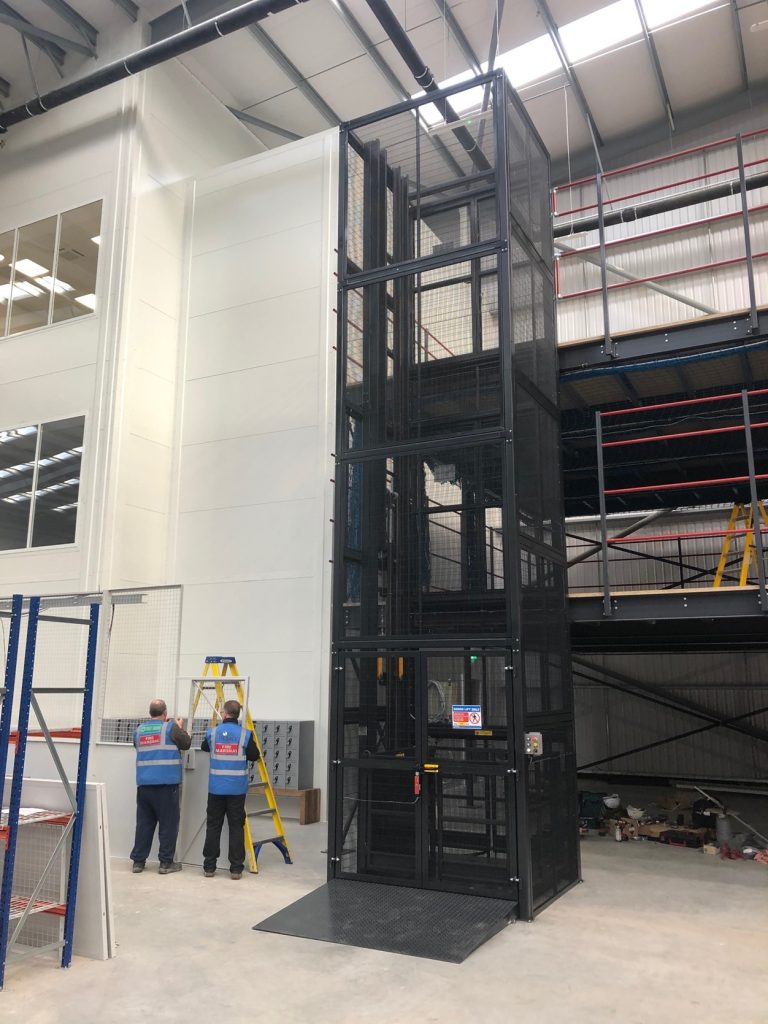
A bespoke goods lift can instead be designed around the application, creating a solution that works around the data centre, rather than forcing the building or operational process to work around a standard product.
-
Moving heavy equipment safely
One of the biggest considerations when handling equipment in a data centre is safety. Moving heavy or awkward loads manually can be challenging. Attempting to move large equipment through restricted access routes can increase the risk of injury, damage to the equipment and delays to a project.
A bespoke goods lift provides a controlled method of transporting loads vertically. Instead of relying on manual handling or unsuitable access routes, equipment can be loaded onto a dedicated platform and transported between levels in a more controlled way.
For data centres handling high-value equipment, preventing damage to machinery and infrastructure is just as important as protecting employees.
-
Maximising limited space
Space is an important consideration when designing a data centre. Every part of a facility serves a purpose, from server halls and electrical rooms to cooling infrastructure, maintenance areas and access routes.
Finding space for additional equipment can therefore be challenging. A compact goods lift can provide an effective solution where available space is limited. Bespoke dimensions and configurations allow the lift to make better use of the available footprint, while gate configurations can help accommodate restricted access routes and building layouts. Where traditional outward-opening gates may not be practical, alternative gate arrangements can be considered to make better use of the space around the lift.
By considering lifting requirements early in the design process, project teams can identify the most suitable location and configuration for the equipment before construction is complete.
-
Supporting ongoing maintenance and upgrades
With data centres operating continuously, minimising disruption during maintenance and equipment replacement is essential. Having a dedicated method of moving heavy equipment between levels can help facilities teams carry out these activities more efficiently, while reducing reliance on manual handling or alternative access routes.
A goods lift can provide long-term value by supporting the movement of replacement components, maintenance equipment and new infrastructure throughout the life of the facility. As data centres evolve and equipment requirements change, having a reliable method of transporting heavy loads can help teams respond to these changes more effectively.
-
Need a bespoke goods lift for your data centre?
Every data centre has different requirements, which means the right lifting solution needs to be carefully designed around the application.
Advanced Handling can work with developers, contractors, consultants, architects and operators to understand the challenges of a project and develop a bespoke goods lift solution to suit the site’s requirements.
If you’re planning a data centre project or looking for a safer and more efficient way to move heavy equipment between levels, contact our team sales@advancedhandling.co.uk to discuss your requirements.
Explore some more related Blogs
News and case studies

Goods Lifts: Proudly Made in Britain
18 September 2024